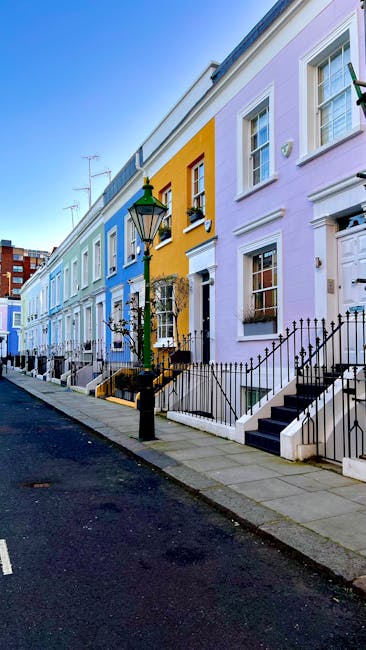
Ladbroke Grove Movers Access Tips for Notting Hill
If you are planning a move around Ladbroke Grove and Notting Hill, access is usually the bit that decides whether the day feels calm or slightly chaotic. Narrow residential streets, controlled parking, garden squares, shared entrances, basement flats, and the occasional awkward turn can all slow a removal down. The good news? With the right Ladbroke Grove movers access tips for Notting Hill, you can avoid the worst delays and make the whole thing feel far more manageable.
This guide is written for people who want practical, local advice rather than vague moving slogans. You will find planning steps, common access problems, realistic workarounds, and a few things experienced movers quietly wish every customer knew before moving day. Let's face it, in West London a smooth move is often less about strength and more about timing, positioning, and a bit of common sense.
Whether you are moving a one-bedroom flat, a family house, or a small office, the same principle applies: make access easy before the van even arrives. That simple shift can save time, reduce stress, and help protect your belongings from rushed handling.
Why Ladbroke Grove Movers Access Tips for Notting Hill Matters
Access is not a side issue in this part of London. It is often the main issue. Streets around Ladbroke Grove and Notting Hill can be busy, tightly parked, and busy again fifteen minutes later. Even when the distance between your front door and the van looks short on a map, the route a sofa or wardrobe actually takes can be surprisingly complicated.
A move can be delayed by something as ordinary as a parked car blocking the loading space, a shared entrance with a narrow hallway, or a building manager who wants notice before the lift is used. If you are moving on a Friday afternoon, or during a school run, or on a day when the road feels packed with traffic and delivery vans, those small details become much bigger.
Good access planning also protects your items. A rushed lift down a stairwell is when corners get scraped and hands get tired. You know the sort of thing: a chest of drawers getting caught on a bannister because everyone is trying to hurry. A bit of access prep prevents that.
Expert summary: In Notting Hill, the best move is often the one that removes uncertainty before the van arrives. Clear parking, clear routes, clear timing, and clear communication beat last-minute heroics every time.
For homeowners, tenants, landlords, and businesses alike, access planning is not just about convenience. It helps you stay within building rules, reduce moving costs, and avoid awkward compromises on the day. That is especially true if your move involves larger items, multiple floors, or a tight window for loading and unloading.
How Ladbroke Grove Movers Access Tips for Notting Hill Works
The process is simple in principle. First, identify where the van can stop. Then work out the most direct route from that stopping point to the property. After that, look at what might interrupt that route: stairs, lift restrictions, security doors, bollards, low tree branches, weight limits, or road activity. Once you see the whole picture, you can plan the move around the building rather than against it.
In practice, movers will usually want to know four things:
- How close the vehicle can legally and safely park to the entrance
- Whether there are stairs, lifts, or split-level entrances
- Whether large furniture can fit through doors, hallways, and turns
- Whether the property or street has time restrictions, access codes, or permit requirements
That is why a good moving plan starts before move day. If you are using a man and van service or arranging a larger team, the crew needs enough detail to choose the right vehicle size and approach. For example, a compact van may work beautifully for a one-bed flat with easy street access, while a larger move may suit a moving truck or even removal truck hire if volume and access call for it.
There is also a difference between a move that is physically possible and one that is genuinely efficient. A sofa might fit through the door if it is tilted just so, but if that requires ten people, twenty minutes, and a fair bit of swearing under the breath, the route is probably not ideal. Better to know that in advance.
For homes, services such as home moves and house removalists are often chosen because they can be matched to the scale of the property and the access conditions. For offices, the logic is similar, though you may also need to factor in building rules and business hours. If that sounds familiar, office relocation services can help coordinate the practical side.
Key Benefits and Practical Advantages
When access is planned properly, the benefits show up in several places at once. Some are obvious. Others only become obvious when they are missing.
- Less time wasted: movers spend less time circling for parking or carrying items over long distances.
- Lower risk of damage: shorter, clearer routes reduce bumps, scrapes, and awkward lifting.
- Smoother teamwork: everyone knows where items are going and how the path works.
- Better cost control: efficient access can help keep labour time down on the day.
- Less stress for you: there is a real difference between a move that feels organised and one that feels improvised.
Another overlooked advantage is goodwill. Building neighbours, concierges, and parking wardens are all easier to deal with when you have planned properly and are not causing a bottleneck outside the front door. It sounds small, but it matters more than people think.
If you are moving furniture only, something like furniture pick up may be the more sensible option for a single item or a small batch. If you are shifting mixed loads, packing support from packing and unpacking services can also make access easier because properly packed boxes are quicker to move and less likely to snag in tight hallways. Simple, but true.
In busy neighbourhoods, the best outcome is usually not the fastest possible move. It is the calmest one. That calm has practical value.
Who This Is For and When It Makes Sense
This guide is useful if you are moving from or to Notting Hill, Ladbroke Grove, or nearby streets where access is not straightforward. That includes residents in mansion blocks, period terraces, converted flats, maisonettes, and properties with shared entrances or basement levels. It also applies if you are handling a commercial move with loading restrictions or a site that only allows access at specific times.
It makes particular sense if any of the following apply:
- You live on a road where parking is tight or heavily controlled
- Your building has stairs, a small lift, or narrow landings
- You have bulky furniture, fragile items, or awkward-shaped objects
- You need to move in a limited time window
- You are organising a move without much help from friends or family
- You want to avoid fees or delays caused by poor access
If you are only moving a few items, a smaller vehicle can be ideal. If the job is more involved, a larger vehicle or a more structured service may be better. The point is not to overcomplicate things. It is to match the service to the reality of the property. Sounds obvious, but people skip it all the time.
Commercial customers in the area may need different planning altogether. For those moves, commercial moves are usually about minimising disruption, keeping entrances clear, and working within business hours. Residential and office jobs can overlap in practical ways, but the access priorities are not quite the same.
Step-by-Step Guidance
Here is a clear way to plan access without getting overwhelmed.
1. Walk the route from door to vehicle
Start with your front door, then trace the route to where the van would stop. Check stairs, corners, narrow paths, low hanging branches, bins, railings, and anything else that narrows the flow. If you would struggle to carry a mattress through it, the movers probably will too.
2. Measure the awkward stuff
Measure the biggest items: sofas, wardrobes, beds, desks, mirrors, and appliances. Then compare them with door widths, hallway width, and lift dimensions if relevant. A lot of moving headaches come from one item that looked fine in the lounge but turns into a problem in the stairwell. Truth be told, it happens more often than people admit.
3. Check street access and parking
Find out where a van can legally stop and how long it can stay there. If there are loading restrictions, red route concerns, resident permit rules, or shared bays, plan for them early. You do not need to be an expert in parking rules to move house, but you do need to know enough not to improvise at the kerb.
4. Tell the movers about building conditions
Tell them about steps, locked gates, concierge desks, lift booking rules, access codes, and anything else that could delay entry. A small note like "there are eight steps to the front door" can be surprisingly useful. So can mentioning that a lift is compact or that the stairwell has a sharp bend halfway up.
5. Reserve space for arrival and loading
If you can arrange temporary clear space near the entrance, do it. Put away bicycles, wheelie bins, prams, or anything else that could get in the way. If the road is quiet first thing in the morning, that can be a better slot than midday, when the street feels permanently in motion.
6. Pack for speed, not just storage
Pack boxes so they stack well and are easy to lift. Keep labels visible. Use proper protection on fragile pieces. For a move with tight access, neat packing matters because messy boxes are slower to handle and more likely to snag on doorframes. A box with loose lids is nobody's friend.
7. Keep a fallback plan
Sometimes a parking space disappears or a lift fails. Decide in advance what happens then. Can the van wait a short distance away? Can items be staged near the entrance? Can you split the load? Small backups make a stressful moment much less dramatic.
Expert Tips for Better Results
Here are the little things that tend to make the biggest difference.
- Use the quietest arrival window you can: early morning often works better than later in the day, especially on busier streets.
- Group items by access difficulty: move large furniture first while everyone is fresh, then boxes and smaller items after.
- Protect the route as well as the item: blankets, corner protectors, and door guards are useful because damage often happens on the way out, not just on the item itself.
- Keep one person focused on coordination: too many instructions from too many people slows everything down. One calm voice usually wins.
- Book the right-sized vehicle: a smaller vehicle may be easier in tight Notting Hill streets, but only if it still fits the load without multiple trips.
To be fair, people sometimes assume "bigger van = better." Not always. In a location with tight turning space or limited stopping options, a slightly smaller vehicle can actually be the smarter choice. It is all about the local fit.
And here is a small but useful habit: take photos of the entrance, stairs, and any awkward corners before move day. You may never need them. But if you do, they help the moving team visualise the route before they arrive. Very handy, very simple.
Common Mistakes to Avoid
Most access problems are predictable. That means they are also avoidable, which is the nice part.
- Assuming parking will "sort itself out": not a great plan in this area.
- Forgetting to mention stairs or lift restrictions: this often leads to the wrong vehicle or team size.
- Not measuring furniture: the item that causes the delay is usually the one nobody checked.
- Packing heavy boxes just because they fit: a box that is technically closed but impossible to lift is a problem waiting to happen.
- Leaving loose items in hallways: they get in the way and slow the crew down.
- Booking everything for the exact same minute: give yourself a bit of breathing room.
One easy mistake is underestimating how long it takes to get from vehicle to door. A ten-metre carry can be fine. A ten-metre carry repeated fifty times is a different story. Your back notices. Everyone notices.
Another common issue is not considering commercial buildings or blocks with managed access. If reception needs notice or the lift must be booked ahead, that detail matters more than the furniture list sometimes. A move can go off track because the right person was not told at the right time. Happens all the time.
Tools, Resources and Recommendations
You do not need a van full of gadgets to organise access well. A few simple tools are enough.
- Measuring tape: for doors, lifts, furniture, and tight turns
- Phone camera: for photographing entrances, staircases, and parking spots
- Notepad or checklist: to track access instructions, codes, and timings
- Labels and marker pens: helpful for coordinating room-by-room unloading
- Protective materials: blankets, wraps, and basic edge protection for furniture
If you are unsure what type of service suits your job, you can compare the scale of your move against options such as man with van, moving truck, or a more tailored approach like home moves. The best choice depends less on the postcode and more on the volume, the access, and how much hands-on help you want.
For businesses, especially those relocating desks, files, and equipment, office relocation services can be worth considering because office moves often need tighter sequencing than household removals. If you only need a straightforward collection of one or two large pieces, furniture pick up may be the cleaner option.
If you want to learn more about the company behind these services, the pages for about us and contact us can help you judge whether the approach suits your move. And yes, reading the terms and conditions and privacy policy is still a sensible move, even if it is not the exciting part.
Law, Compliance, Standards, or Best Practice
Moving in London often involves practical compliance rather than complex legal process. You may need to follow parking restrictions, building rules, and site-specific access instructions. In some cases, a property manager, landlord, concierge, or local parking system will set the terms for loading and unloading. Those rules are not just formalities. They can affect timing, vehicle choice, and whether a move runs smoothly at all.
Best practice is straightforward: confirm access before the move, communicate any restrictions early, and avoid blocking roads, gates, or entrances longer than necessary. If a building has lift booking rules or preferred move times, respect them. It keeps relationships smooth and reduces the chance of being turned away at the door. Nobody wants that on moving day, especially not with a sofa half out the entrance.
For removals companies, professionalism usually means arriving with the right vehicle, the right equipment, and enough information to handle the property responsibly. For customers, it means being accurate about access and honest about any limitations. It is a two-way thing, really.
Where waste, disposal, or unwanted furniture is involved, use a service that is set up for that job rather than leaving items in communal areas. If you only need a specific item removed, the dedicated furniture collection route is often cleaner and less disruptive than trying to fold it into a full move. Good practice is often just common sense with a sharper edge.
Options, Methods, or Comparison Table
Different moves need different approaches. Here is a practical comparison of common options for Notting Hill access conditions.
| Option | Best for | Access strengths | Possible limitations |
|---|---|---|---|
| Man and van | Small to medium moves, quick collections, flexible jobs | Good for tighter streets and shorter loading distances | May require more trips for larger loads |
| Man with van | Light moves, single-room contents, student-style relocations | Often efficient for compact access and simple loading | Not ideal for bulky, high-volume moves |
| Moving truck | Larger household or mixed-volume moves | Useful when there is a substantial load to move in fewer trips | Can be harder to position on narrow streets |
| Removal truck hire | Moves needing a dedicated vehicle solution | Good when the move is planned around vehicle capacity | Needs careful route and parking planning |
The right option depends on access as much as volume. A small flat on a tight street may still be more awkward than a larger house with a clean driveway approach. That is why local knowledge matters.
Case Study or Real-World Example
Imagine a couple moving from a second-floor flat off Ladbroke Grove into a terraced property in Notting Hill. The flat has a narrow stairwell, the street outside is busy in the morning, and there is no convenient long-stay parking directly outside the building. On paper, the job looks manageable. In person, it needs planning.
They start by checking the largest items: a bed frame, a sofa, two wardrobes, and several boxes of books. The wardrobe is the issue, as usual. Rather than finding out on move day, they ask the movers to review the access route in advance. The team recommends splitting the load, bringing the larger items down first, and arriving early enough to use a short loading window before traffic builds.
They also clear the hallway the night before, label boxes by room, and speak to the building manager about lift access. On the day itself, the van parks as near as possible, the movers have a clear route, and the bulky items are handled before the street gets too congested. Nothing dramatic happens. Which, honestly, is the goal.
That kind of move is not glamorous, but it is exactly what good access planning is meant to achieve: fewer surprises, fewer delays, and less frantic running up and down stairs with a lamp in your hands.
Practical Checklist
Use this checklist before move day. It is simple, but it catches a lot.
- Measure furniture, doorways, stairwells, and any lift dimensions
- Confirm where the van can legally stop
- Check for parking permits, loading limits, or building access rules
- Tell the movers about stairs, steps, gates, and access codes
- Clear hallways, entrances, and shared spaces
- Pack boxes so they are labelled, sealed, and easy to carry
- Protect fragile items and awkward corners
- Book the right-sized vehicle for the property and the load
- Notify neighbours or building staff if needed
- Keep a backup plan in case parking or lift access changes
If you tick those off, you are already ahead of most moving days. Not perfect, maybe, but much better.
Conclusion
Good Ladbroke Grove movers access tips for Notting Hill are really about control. Not controlling everything, because that is impossible. Just controlling the parts you can: parking, timing, route, communication, and vehicle choice. Once those pieces are in place, the move becomes more predictable, more efficient, and a lot less draining.
That matters whether you are shifting a single sofa, a family home, or an office full of equipment. In an area where access can change from one street to the next, the smartest move is the one planned around the building, not guessed from the kerb.
If you are preparing for a move and want a smoother start, get the access details sorted early, keep your instructions clear, and choose a service that fits the reality of the property. It really does make a difference.
Get a free quote today and see how much you can save.
And if the day feels a bit too full of boxes and doorways, take a breath. The move will pass, the key will turn in the new lock, and the hard part will be behind you before long.
Frequently Asked Questions
What are the most important access tips for moving in Ladbroke Grove and Notting Hill?
The biggest ones are checking parking, measuring doorways and furniture, telling movers about stairs or lifts, and making sure the van can stop close enough to the entrance. Those four things solve a surprising amount of trouble.
Do I need to measure my sofa before booking movers?
Yes, especially in period properties or flats with tight hallways. A sofa that looks fine in the room can become awkward once it reaches a narrow landing or stair turn.
Is a man and van service enough for a move in Notting Hill?
Sometimes, yes. If you have a small to medium load and access is reasonable, a smaller service can work well. If you have bulky furniture or a larger household move, you may need something bigger.
How early should I plan access details before moving day?
Ideally, as soon as you know your move date. Even a quick check of parking and building rules a week or two ahead can save a lot of last-minute stress.
What if there is no parking directly outside my property?
That is common in parts of West London. Movers can often work with a nearby legal stopping point, but the route should be checked in advance so the team knows how far they will need to carry items.
Do building managers usually need notice before a move?
Often, yes. Some buildings want advance notice for lift booking, access control, or move timing. It is always better to ask early than to discover the rule at the doorway.
What is the best time of day to move in a busy area like Notting Hill?
Earlier in the day is often easier because traffic, deliveries, and local activity tend to increase later on. That said, the best slot depends on your building's access rules and parking conditions.
Can packing help with access problems?
Yes. Well-packed, clearly labelled boxes are quicker to move and easier to stack. That makes a real difference when halls are narrow or the loading area is tight.
Should I choose a moving truck or a smaller van for tight streets?
It depends on the load and the road. A smaller van can be easier to place on narrow streets, but a larger load may still need a bigger vehicle. The aim is to match the vehicle to both the access and the volume.
Are office moves handled differently from home moves?
Usually, yes. Office moves often involve building rules, business hours, equipment handling, and disruption control. That is why office relocation services are useful when the move has more structure than a standard household relocation.
What should I do if access conditions change on the day?
Stay calm and tell the movers immediately. Most access issues can be managed with a fallback plan, whether that means adjusting the parking point, changing the loading sequence, or splitting the move into stages.
How can I make a Notting Hill move less stressful overall?
Start early, be precise about access, pack neatly, and choose a service that suits the property. Little bits of preparation make the day feel much more controlled, and that's usually what people remember most.